
Wheels collect more dirt than any other part of the car. Brake dust – fine metallic particles from pads and discs – mixes with road grime and moisture and, if left for weeks, becomes hard to remove. Regular, gentle cleaning keeps alloys looking good and lets you spot damage early.
Before you start
- Let wheels and brakes cool down. Never clean hot wheels straight after a drive – products dry too fast and leave marks.
- Use separate tools. A dedicated brush, mitt and cloth for wheels only. Brake dust is abrasive and should never reach your paint mitt.
- Wheels first. Clean them before the paintwork, so splashes from the wheels don't land on a freshly washed car.
Step by step
- Rinse thoroughly to remove loose dirt and grit, including the barrel behind the spokes.
- Wash with shampoo solution – a bucket with 7WASH Car Wash Shampoo and your wheel brush. Work the face, spokes, wheel nuts and the inner barrel.
- Rinse again and check for remaining deposits; repeat on stubborn areas rather than scrubbing hard.
- Clean the tire sidewall with the same brush, then rinse.
- Dry wheels and tires with a separate microfiber cloth reserved for wheels.
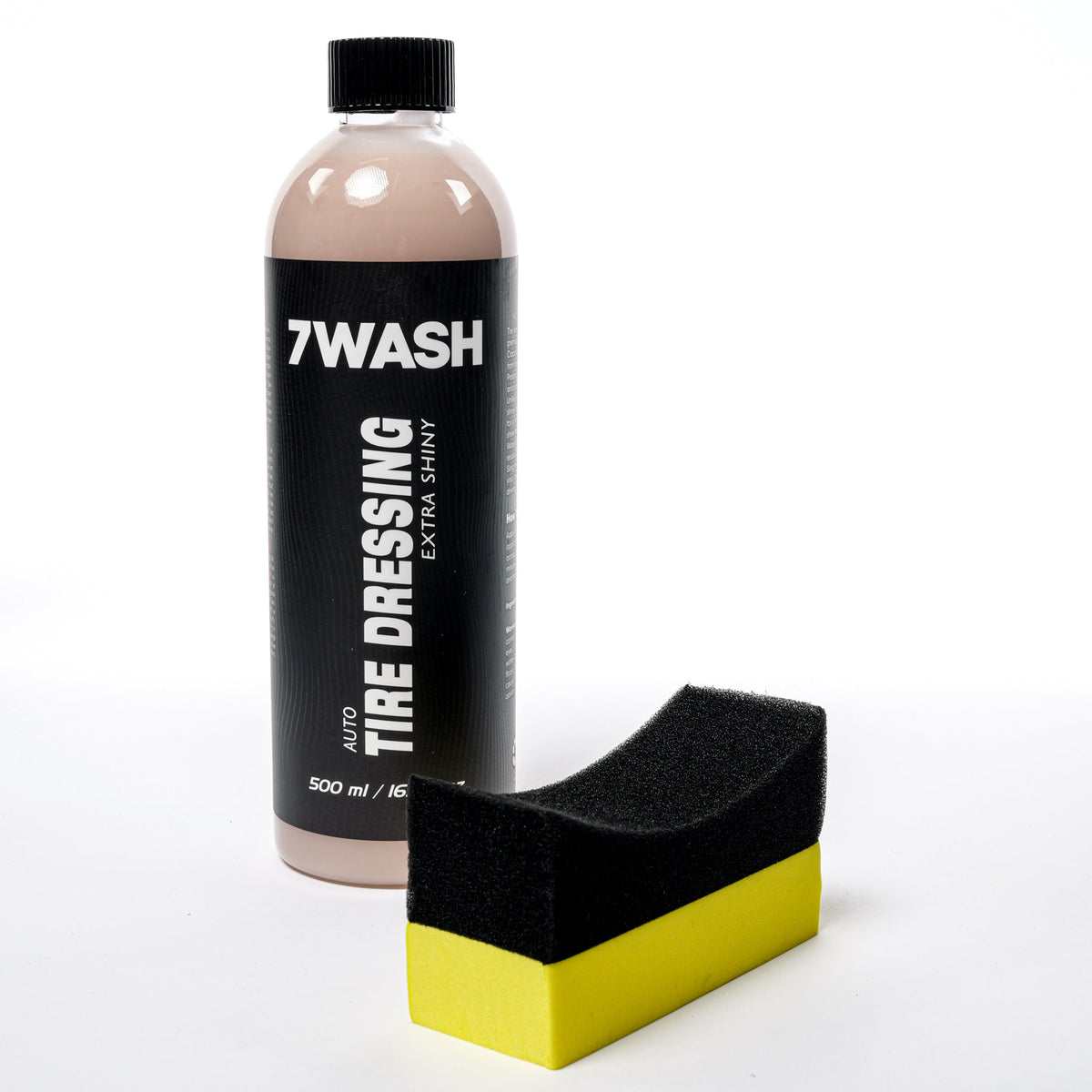
- Dress the tires with 7WASH Tire Dressing on the sidewall only – never on the tread.

Keep wheels clean for longer
- A sealed, smooth surface makes brake dust easier to rinse off. 7WASH Hydro Slick can be applied to clean, dry, cool painted or clear-coated wheel faces – test on a small area first.
- Clean wheels regularly – every wash is ideal – so brake dust never has time to bake on.
- In winter, remove road salt from wheels as soon as temperatures allow.
Mistakes to avoid
- Harsh household acids or abrasive pads that can damage finishes.
- Pressure-washing too close to valve stems and sensors.
- Using the same mitt for wheels and paint.
FAQ
How often should I clean my wheels?
Ideally at every wash. The longer brake dust stays on, the harder it is to remove.
Can I clean wheels when they are hot?
No. Wait until wheels and brakes have cooled down, otherwise cleaning products dry on the surface.
Does tire dressing go on the tread?
No – sidewall only. On the tread it would reduce grip.
Please follow the safety notes on each product page.